
The Quarter I 2026 tax declaration period brings major changes for millions of household businesses nationwide. The Government’s issuance of Decree 68/2026/ND-CP and the Ministry of Finance’s Circular 152 has established an entirely new legal framework.
Understanding the public’s unfamiliarity with the new rules, the tax sector has launched the D15 campaign to accompany household businesses during the 15-day peak period before the declaration deadline.
This article provides a detailed explanation of the Tax Department’s guidance, helping you master the calculation methods and filing deadlines for household business tax declaration, so you can confidently grow your business.
Tax-Exempt Revenue Threshold & 2 New Tax Calculation Methods
Household businesses with annual revenue of 500 million VND or less are fully exempt from Value Added Tax (VAT) and Personal Income Tax (PIT). Once revenue exceeds this threshold, you can choose to calculate tax based on taxable revenue or taxable income, depending on your business scale.
The new policy brings great news: the tax-exempt threshold has been clearly set at 500 million VND. If your annual revenue falls within this limit, you have no tax obligation whatsoever.
Once revenue exceeds the 500 million VND threshold, Value Added Tax (VAT) is calculated using the direct method, equal to revenue multiplied by the VAT rate percentage prescribed for the relevant business sector.
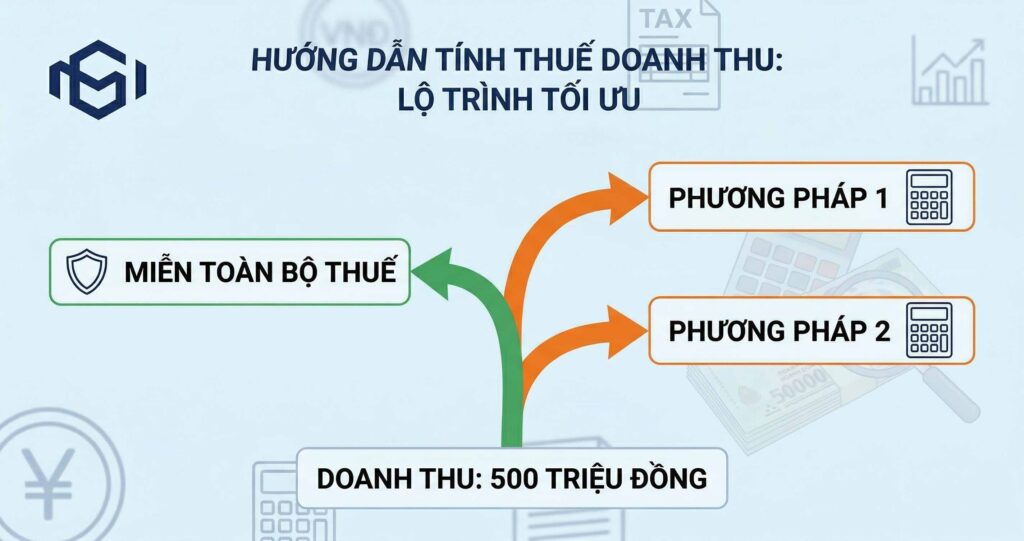
For Personal Income Tax (PIT) specifically, the tax authority offers two methods for you to choose from:
- Method 1: Tax rate multiplied by taxable revenue. Applies to household businesses with revenue above 500 million VND and below 3 billion VND. The PIT payable equals taxable revenue (total revenue minus the 500 million VND exemption threshold) multiplied by the tax rate.
- Method 2: Tax rate multiplied by taxable income. Widely applied to all household businesses with revenue above 500 million VND. This is a more favorable method, in which taxable income is determined as total revenue minus reasonable, valid expenses incurred during operations.
How to Calculate and File Household Business Tax for Real Estate Leasing Activities
Individuals leasing real estate apply a 5 percent VAT rate and a 5 percent PIT rate on the portion of revenue exceeding the 500 million VND threshold. The total maximum deduction does not exceed 500 million VND.
For premises or residential leasing activities, the tax policy is designed with fixed rates. VAT equals revenue multiplied by 5 percent. PIT equals revenue minus 500 million VND, then multiplied by 5 percent.

If you own multiple properties for lease at the same time, you may choose to apply the 500 million VND deduction to one or several specific contracts, as long as the total deduction across all contracts does not exceed 500 million VND.
Regarding filing obligations, individuals leasing directly may choose to file a single declaration by January 31 of the following year, or file twice a year. If an organization is the lessee and commits to filing on the lessor’s behalf, that organization will file tax quarterly based on the contract’s payment periods.
E-Invoice Regulations & Branch Business Location Management
Household businesses with taxable revenue of 1 billion VND or more are required to use e-invoices. Households with multiple business locations use only a single tax code and must clearly state each branch’s address on the invoice.
Under Clause 8, Article 1 of Decree 123, the transparency drive requires establishments with revenue of 1 billion VND or more to adopt tax-authority-coded e-invoices, or invoices generated from cash registers connected to the data system.
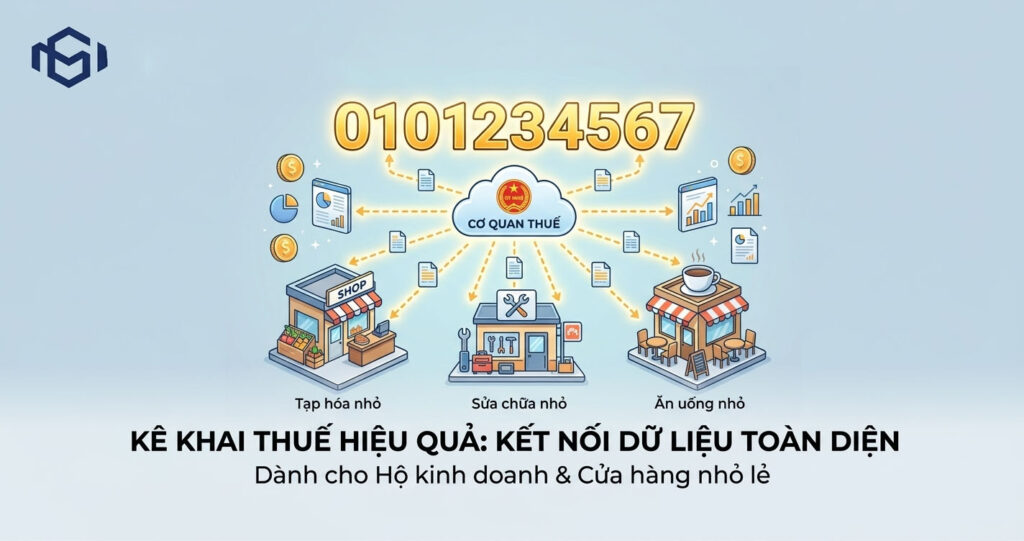
A major technological improvement in 2026 is the chain management mechanism. If you operate multiple business locations, you do not need to register a new tax code. You simply use a single household business tax code for all locations, with the specific address printed on each invoice. Based on this data, the tax management system automatically separates the figures and pre-generates suggested declarations, helping you file accurately without the effort of manual calculation.
Household Business Filing Schedule & Key Tax Declaration Deadlines for 2026
The tax filing schedule is divided by business scale: under 50 billion VND in revenue files quarterly, while over 50 billion VND files monthly. Notably, the declaration period for the early months of 2026 has been extended to April 30 to allow taxpayers time to get familiar with the system.
To avoid the risk of late-filing penalties, you need to check your business scale against the highly detailed statutory deadlines below:
1. For household businesses under 500 million VND: You only need to submit a revenue notification no later than January 31 of the following calendar year.
2. For newly established household businesses:
- If operations begin in the first 6 months of the year and revenue is under 500 million VND: submit the first notification no later than July 31 and the second by January 31 of the following year.
- If operations begin in the last 6 months of the year and revenue is under 500 million VND: only a single notification is required, no later than January 31 of the following year.
- As soon as cumulative revenue exceeds 500 million VND, you must switch to quarterly tax declaration and payment starting from the quarter in which the threshold is exceeded.
3. For household businesses over 500 million VND: The group with revenue of 50 billion VND or less will file VAT declarations quarterly. The group above 50 billion VND files monthly. PIT is declared and paid at the same time on the same declaration form as VAT, creating maximum synchronization.
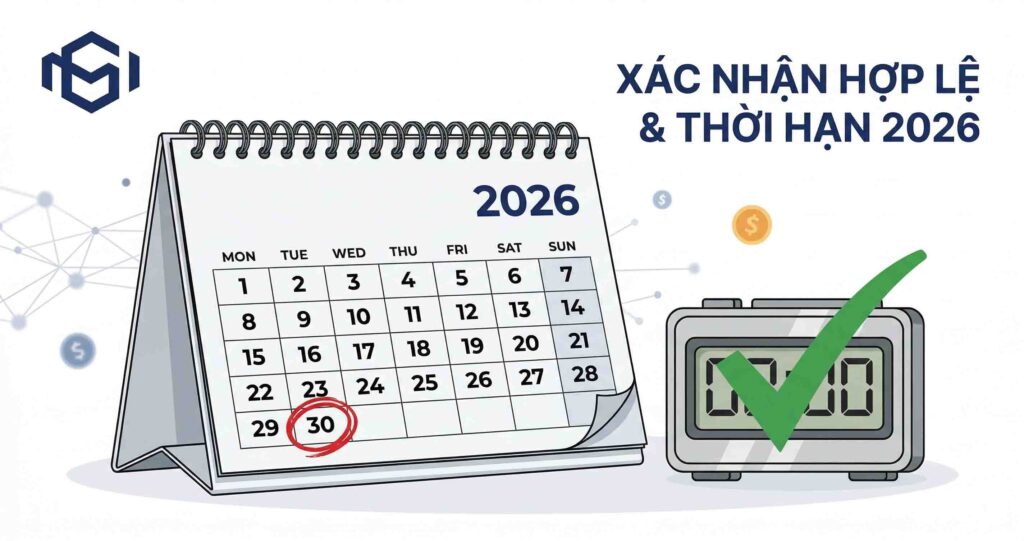
Special note for Q1/2026: Understanding the initial difficulties, the tax authority has decided to postpone the filing deadline for tax declarations of January, February, and March 2026 to no later than April 30, 2026.
Transitioning from the Presumptive Tax Method & the D15 Accompaniment Campaign
The tax authority is committed to not using the 2026 household business tax declaration revenue to reassess tax obligations for previous years. Any errors resulting from unfamiliarity with the new procedures under Circular 152 will be met with dedicated guidance rather than penalties.
Many long-standing household businesses have expressed concern about transitioning from presumptive (lump-sum) tax to self-declaration. Tax Department representatives have officially confirmed, to put your mind fully at ease: when you switch to self-declaration from January 1, 2026, the state authorities will not use this new data to retroactively reassess or re-determine tax amounts for previous years. You will also not be subject to administrative penalties for the past, except in cases where the authorities discover deliberate concealment of revenue.

To support practical implementation, the Tax Department has issued the Household Business Support Handbook, divided into 10 practical topics, from registration and declaration to invoice usage. During the 15-day peak period of the D15 campaign, tax officials will guide taxpayers through practicing draft declarations on the portal until they become proficient before submitting official filings.
Frequently Asked Questions (FAQ) About Household Business Tax Declaration 2026
Q1. I have been paying presumptive tax since 2025 and earlier. If I switch to self-declaration in 2026 and my revenue jumps sharply, will I be subject to back-tax collection for previous years?
Absolutely not. The Tax Department has clearly stipulated that the 2026 declared revenue level will not be used to reassess tax obligations for previous years. You do not need to adjust your old records, nor will you be penalized, as long as there was no fraud or concealment of revenue in the past.
Q2. My household business plans to pay Personal Income Tax using the method of revenue minus expenses. When should I file this tax declaration?
If you apply the method of taxable income multiplied by the tax rate, you will make provisional Personal Income Tax payments monthly or quarterly, on the same VAT declaration form. Combining both into a single declaration form saves you considerable processing time.
Q3. I just opened my store in August 2026, and I expect revenue to reach only 300 million VND by year-end. When do I need to report my taxes?
Since your store began operating in the last 6 months of the year and your actual total revenue is below the 500 million VND taxable threshold, you only need to submit a single revenue notification to the tax authority. The deadline for submitting this notification is January 31, 2027.
Navigating the 2026 tax law system with its host of new circulars on your own can cost you countless precious hours. Instead of worrying about late-filing penalties or the risk of data errors, hand over this entire paperwork burden to the experts at Full-Service Tax Declaration Services.
Our team of chief accountants will build a solid financial safeguard, ensuring 100% valid records so you can fully focus on accelerating your revenue growth with complete peace of mind.